

Agenda
8:30 AM – 9:15 AM
"Before the Bell": Session for Principals
Leadership 🌟 Promising Practice 🏫
And April Oates, Tabbetha Greco, and Cassie Muller
Before the Bell is a special principals’ session on taking a multi-tiered approach to family engagement. You’ll get practical tools, reflection questions, and a preview of the new e-book, Within Reach, by coauthors Dr. Barbara Boone, Dr. Hadley Bachman, and Sarah DeShon. During this session, coauthors Hadley and Sarah will be joined by practicing principals who have implemented these strategies. Together, they will co-present to share real success stories directly from their schools. You’ll leave with ideas to get started on building multi-tiered family engagement into your school improvement plan, so that every family is reached.
9:30 AM – 10:45 AM
Keynote Speaker
All Kids Are Math Kids
Math & STEM 🌐
In this keynote, Shalinee Sharma, national bestselling author of Math Mind and CEO and Co-Founder of Zearn, will explore how families, educators, and community leaders can help create the conditions for every student to learn and love math. Drawing on leading research and practical insights from classrooms across the country, attendees will learn how adults can help shape students’ math confidence and support rigorous, grade-level mathematics.
11:00 AM – 12:00 PM
Breakout Session 1
Session 1 - Principals Leading Family Friendly Schools
Principals Leading Family Friendly Schools

Promising Practice 🏫
National Family Friendly Schools Certification is a continuous improvement process that helps strengthen, sustain, and celebrate meaningful family partnerships.
Join this session to hear from 2 principals, one middle school and one elementary, leading schools in this process. Mandy Sagrecy has been leading a Family Friendly School since 2021-22 and Beth Hathaway started the process in the 25-26 school year.
Session 2 - Student-Led Conferences: Family Engagement with Students at the Center

Student-Led Conferences: Family Engagement with Students at the Center
Student Voice 📣
And Patty Randall, Mary Spurrier
This session will discuss the importance of the voice of students in family-school partnerships. Two middle-school teachers will share their insights on engaging students in family engagement practices and their firsthand experiences designing, organizing, and participating in student-led parent-teacher conferences. Attendees will (1) learn about the research and theoretical evidence for elevating student voice in family engagement efforts and (2) be equipped with practical tools, resources, and inspirations for organizing student-led conferences and engaging students in the collaboration between home and school.
Session 3 - Future Fluent Families: Designing AI Literacy Activities with Middle School Families

Future Fluent Families: Designing AI Literacy Activities with Middle School Families

Artificial Intelligence 💡
Explore “Future Fluent Families,” a co-designed artificial intelligence literacy program for middle schoolers and their parents. Join us as we share unique insights from our latest study on family perspectives on AI. Leave this session with a free, shareable curriculum to help families cultivate AI career readiness and confidence right from their living rooms.
Session 4 - Early Literacy Practices For Promoting Family Engagement and Education

Early Literacy Practices For Promoting Family Engagement and Education
Early Literacy 📚
Talk, Read, Write, Sing, and Play–these simple practices help unlock the door for early literacy learning when used every day. When families know what to say and how to play, they are better prepared for teaching vital early literacy and language skills. This presentation will focus on simple strategies embedding early literacy and language practices into daily play, for both families and programs. We will discuss what this looks like both at home and in early learning programs, addressing both family engagement AND education. Practical strategies for sharing resources with families as well as information about how to bring playful early literacy practices into daily life will be provided.
Session 5 - Creating Protective Factors in Children Through Positive Home-School Practices

Creating Protective Factors in Children Through Positive Home-School Practices
Student Mental Health ❤️
Protective factors, which are factors associated with resilience, can buffer against childhood trauma’s harmful effects and improve children’s and adolescents’ social, emotional, physical, and academic outcomes. While individuals can make a difference in supporting children’s mental health independently, the impacts are amplified when schools and families come together to focus on building protective factors. In this session, we will discuss opportunities for families and schools to partner together to promote protective factors and increase students’ resilience, focusing on four research-based protective factors and how to use a strengths-based, home-school partnership approach to support each. Participants will gain valuable, partnership-focused resources including planning tools, discussion guides, a research brief, and one-pagers for families in multiple languages.
Session 6 - The Family Math Playbook: Infusing Family Math into your School or Organization's programming

The Family Math Playbook: Infusing Family Math into your School or Organization's programming
Math & STEM 🌐
Research suggests that engaging families in children’s math learning boosts children’s skills, knowledge, and attitudes toward math, which in turn predicts positive long-term academic and life outcomes. Yet schools and family engagement organizations often overlook this powerful strategy. In this session, participants will: -Discover what the research says about family math and why schools and family engagement organizations should embrace it -Consider how to infuse math in your school or organization’s programming in four stages -Learn from examples of family math in action and field resources -Assess your own organizational readiness for family math and chart your own game plan.
Session 7 - Strengthening Trust in Schools through Family Partnerships

Strengthening Trust in Schools through Family Partnerships

Attendance📅 , Promising Practice 🏫
Trust between families, students, and educators is critical to ensuring that learners and schools thrive. Budgets and financing, safety, shifting policies and leadership impact trust, as do emerging technology in the lives of young people. In this session, participants will look at what goes into measuring trust and explore a range of strategies schools are using to foster stronger home-school relationships. Participants will walk away with open-access resources including the relational trust scale, strategy finder, and current research and resources on trust in the US and globally.
12:00 PM – 12:15 PM
Break
12:15 PM – 12:45 PM
Lunch Panel
Lunch Panel - Session 8 - What Fathers Wish Teachers Knew
What Fathers Wish Teachers Knew
Family Voice 📣
And Carlos Christian, Ryan Shepperd, Antonio Smith, and Ashiko Hudson
Hear from a panel of fathers, intentional about being engaged in their children’s development and learning. In many systems, like education and early learning, fathers are considered secondary parents. Fathers should feel empowered to confidently participate in conversations with educators, counselors, and academic administrators regarding their children’s behaviors, as well as the development of their scholastic successes. According to the National Fatherhood Initiative (NFI) in Father Facts 8, when the fathers are present in a healthy and responsible way, children have better academic outcomes, appropriate behaviors, and teen pregnancy decreases by 7x’s. This session will provide an opportunity for the panelists to discuss what they wish teachers knew and how teachers can best engage fathers in various methods of communication.
12:45 PM – 1:00 PM
Break
1:00 PM – 2:00 PM
Breakout Session 2
Session 9 - Research-based Partnership Programs: Why bother?

Research-based Partnership Programs: Why bother?
Promising Practice 🏫
Just about every school at every level has some good practices of family engagement that fills them with pride– a good Open House, a dedicated group of volunteers, a welcoming Grandparent’s Day, etc. But not every school has: a research-based program that includes: –An Action Team for Partnerships (not one person in charge of all-things with parents). — A written plan with Goal-Linked engagement activities to increase student success in school linked to goals in their own SIP — School Improvement Plan. — A way to evaluate progress from year to year, and to plan next steps. It is no longer acceptable to just “do anything'” to engage parents. Good partnerships focus on the way programs are organized and improved from year to year, and how they focus clearly on increasing student learning and development. This session will introduce the basic structures and processes for research-based partnership programs in ALL schools, with ALL families, and to increase the success of ALL students.
Session 10 - STEM Starts with Their Voice: Building youth-led, family-powered learning through Teen Science Cafés
STEM Starts with Their Voice: Building youth-led, family-powered learning through Teen Science Cafés

Math & STEM 🌐, Student Voice 📣
What changes when young people help shape STEM learning and families are welcomed as valued partners? In this interactive session, participants will explore the Teen Science Café model as an example of youth-led, relationship-centered STEM engagement. Through reflection, discussion, and a rapid design activity, participants will examine how student voice can move from feedback to shared leadership. They will also explore ways families can contribute cultural knowledge, career connections, expertise, encouragement, and community resources while preserving youth leadership. Participants will leave with adaptable strategies and a planning tool for creating welcoming, relevant STEM experiences that can be used in schools, afterschool programs, libraries, and community settings.
Session 11 - Raising Resilient Learners in an AI World: AI Tips Sheets for Families

Raising Resilient Learners in an AI World: AI Tips Sheets for Families
Artificial Intelligence 💡
In the United States, 91% of kids aged 13-17 use generative AI in their personal lives, and 72% have used AI companions. Much of kids’ AI use happens outside of school. This places parents and caregivers in a crucial role: guiding kids to live well in an AI-driven world. Families have expressed both concerns about how to simultaneously protect and prepare their children in an AI world—and a desire for clear, practical guidance on how to approach their children’s AI use. In this session, we will share the Brookings Institution’s research about the benefits and risks that AI brings to students and share with you the Tip Sheets we have created to help families understand how AI shows up in their kids’ lives and how to talk about these issues at home. Together, we’ll explore how to talk to families about AI and connect them to resources like these. You will leave with a greater understanding of AI’s risk and benefits, resources you can share with families, and ideas for how to continue this conversation.
Session 12 - Early Literacy and Kindergarten Readiness Resources
Early Literacy and Kindergarten Readiness Resources
Early Literacy 📚
This session will discuss the importance of early language, literacy, and kindergarten readiness skills for children from birth to age five and highlight several new resources from the Ohio Department of Children and Youth (DCY) that support these skills in developmentally appropriate ways. Attendees will: 1) Understand the importance of language, literacy, and kindergarten readiness opportunities from birth to support later reading and school success; 2) Have opportunities to practice strategies included in the resources that build children’s early language, literacy, and kindergarten readiness skills; and 3) Gain access to all resources available through DCY to share them with families and other professionals.
Session 13 - Listening First: What Students Teach Us About Chronic Absenteeism (working title)
Listening First: What Students Teach Us About Chronic Absenteeism
Student Voice 📣, Attendance 📅
Heather Tsavaris
Session 14 - Small Shifts, Big Impact: Redefining Family Engagement in 6-12 Mathematics

Small Shifts, Big Impact: Redefining Family Engagement in 6-12 Mathematics

Math & STEM 🌐
What if the most powerful force in your math classroom was waiting at home? When families step into the equation, student motivation, persistence, and mathematical identity transform. Yet as students move into middle and high school, the home–school connection often fades — and many educators feel that distance growing. This interactive session flips that narrative. Grounded in the “Building Family–School Partnerships in Secondary Math” book by Dr. Shakiyya Bland and Dr. Julitha Rials, participants will explore research-informed strategies that rebuild and strengthen family engagement. You’ll engage with resources showing how to cultivate culturally responsive, strengths-based partnerships that connect families to the Standards for Mathematical Practice, Math Language Routines, and Funds of Knowledge. Small, intentional shifts in language, structure, and communication can profoundly reshape how students see themselves as mathematicians. Leave with practical tools ready to use and a renewed vision for what family partnership can be.
Session 15 - Four Essential Elements of Foundational Family Engagement: Colorado's Framework

Four Essential Elements of Foundational Family Engagement: Colorado's Framework
Leadership 🌟
This session walks participants through a step-by-step process to implement systemic, sustainable, and scalable family engagement practices. Attendees will first learn a brief overview of Colorado’s research-based family engagement trail map. District leaders will then share concrete examples about how they support schools in implementing the Four Essential Elements of CO’s family engagement framework: Create an Inclusive Culture, Build Trusting Relationships, Decision Capacity-Building Opportunities, and Dedicate Necessary Resources.
2:00 PM – 2:15 PM
Break
2:15PM – 3:15 PM
Breakout Session 3
Session 16 - The OCS Transition Series; An Approach to Bridging the Transitional Gap

The OCS Transition Series; An Approach to Bridging the Transitional Gap

Promising Practice 🏫
And Dr. Linda Gibson-Fletcher, Annabel Coca, David Petropolous, and Annie Gibson
An overview of how our school helped bring important information and resources to increase parent/guardian engagement on transition and post-secondary options.
Oakstone Community School serves a student population of 100% students with disabilities; primarily on the autism spectrum. This presentation will be a review of Oakstone Community School’s Transition series of evening information sessions for families of it’s students.
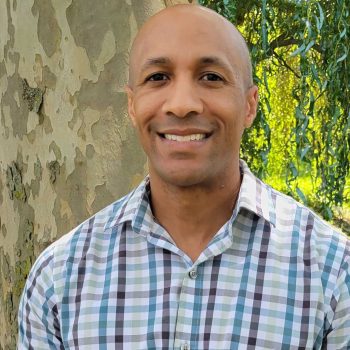
Session 17 - Family Engagement Resources to Promote Math Learning

Family Engagement Resources to Promote Math Learning
Math & STEM 🌐
In this presentation, participants will hear about the Ohio Statewide Family Engagement Center’s efforts to improve family-school collaboration around math learning. Here you will learn about parent perceptions about mathematics, practical strategies for improving communication, partnership, and hope, and engage with the Center’s Family Math Toolkit. Participants will leave with new resources, new ideas, and actionable steps for improving math learning with families.
Session 18 - Families, Schools, and Businesses Working Together for STEM Education (working title)
Families, Schools, and Businesses Working Together for STEM Education
Math & STEM 🌐, Leadership 🌟
Heather Sherman
Session 19 - The Power of Everyday Moments: Simple Interactions and Family Engagement
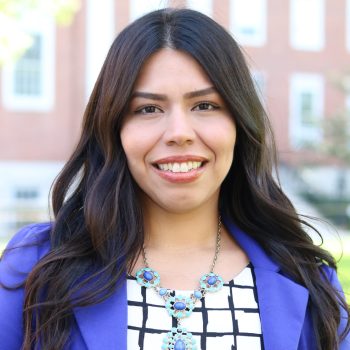
The Power of Everyday Moments: Simple Interactions and Family Engagement
Leadership 🌟, Communications 💬
This interactive session gathers educators and family engagement leaders to reflect on the power of everyday relationships in the lives of children and families. We explore the Simple Interactions (SI) approach—a strengths-focused tool for noticing and naming the ordinary moments that matter most: greetings, transitions, conversations, and everyday exchanges. Together, we develop a shared language and lens for what makes interactions meaningful, and examine how to apply this lens to strengthen authentic connections with families. Participants will: – Reflect on the centrality of human relationships in supporting children and families, – Observe and analyze real-world interactions using the Simple Interactions tool, and – Identify concrete ways to strengthen everyday connections with families in their schools and communities.
Session 20 - School Counselors & Family Engagement: Small Steps For Building Hope and Belonging Together

School Counselors & Family Engagement: Small Steps For Building Hope and Belonging Together

Student Mental Health❤️
Hope and Belonging are building blocks to school and life success. Hear about how one school counseling team evolved their programming to include family engagement to impact their students’ levels of hope and belonging. Attendees will leave with practical examples of ways to advance family and school engagement to create connection, agency, and pathways to support student success.
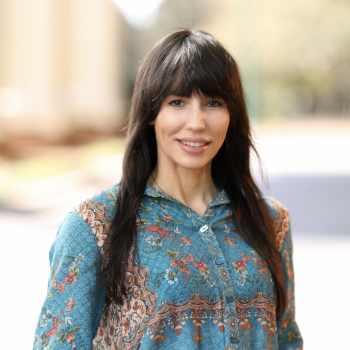
Session 21 - Family & Community Engagement: Concrete Strategies for your STEM Programs

Family & Community Engagement: Concrete Strategies for your STEM Programs
Math & STEM 🌐
Attendees will reflect on ways they currently engage families in STEM, identify the components to effective family engagement within career-connected STEM activities, practice adapting career-connected STEM activities to include families, and brainstorm ways to adapt their STEM activities to be career-connected, family engaged.
3:30PM – 4:30 PM
After the Bell: Sessions for Statewide Family Engagement Centers